Electric Stacker Capacity Explained: Load Center, Lift Height and Residual Capacity
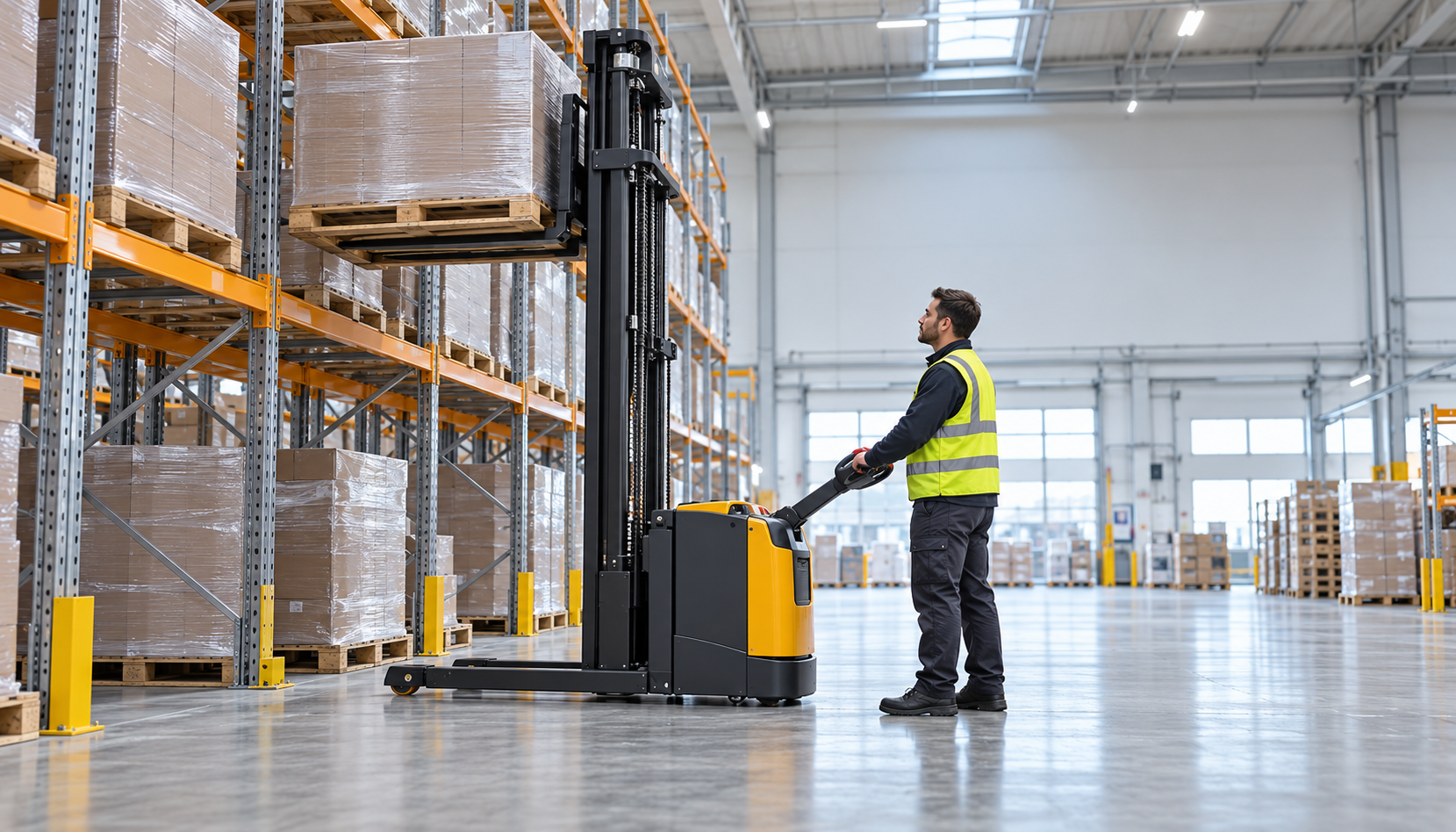
Electric Stacker Capacity Explained: Load Center, Lift Height and Residual Capacity
An electric stacker may be advertised with a rated capacity of 1,200 kg, 1,500 kg or 2,000 kg. However, that number does not automatically mean the machine can lift every load of that weight to its maximum height.
Rated capacity applies under defined conditions. The actual load that a stacker can handle may depend on the load center, lifting height, mast configuration, fork length, attachments and weight distribution.
For warehouse buyers, the important question is not simply, “How many kilograms can this stacker lift?” It is:
Can this particular configuration handle our actual pallet, at our required height, under our operating conditions?
What Does Rated Capacity Actually Mean?
Rated capacity is normally specified at a defined load center and under a particular equipment configuration. The truck’s capacity plate or manufacturer’s capacity chart should identify the conditions under which the rating applies.
For U.S. workplaces, OSHA states that only loads within a powered industrial truck’s rated capacity should be handled. Its guidance also emphasizes that capacity is rated for a specified load center and that operators must use caution with off-center loads. Occupational Safety and Health Administration
The capacity shown in a product name or catalogue should therefore be treated as a starting point—not as permission to lift that weight in every situation.
When evaluating a stacker, check:
- Rated load capacity
- Reference load center
- Maximum lift height
- Capacity at the required lift height
- Installed mast and fork configuration
- Approved attachments
- Information shown on the actual truck’s capacity plate
If a supplier cannot confirm capacity for your required height and load center, request a capacity chart or written technical confirmation.
Understanding Load Center
The horizontal load center is the distance from the vertical fork face to the load’s center of gravity.
For a uniformly distributed, 1,000 mm-deep pallet loaded in the normal direction, the center of gravity may be approximately 500 mm from the fork face. A uniformly distributed 1,200 mm-deep load may place it approximately 600 mm away.
However, this simple half-depth calculation is not reliable for irregular or unevenly distributed loads.
A useful concept is:
Load moment = load weight × load-center distance
As the load center moves farther forward, the overturning moment increases. A longer, poorly positioned or front-heavy load can therefore exceed the truck’s permitted operating condition even when its total weight is below the advertised capacity.
OSHA’s load-composition guidance warns that positioning a long rectangular load lengthwise can move the load center forward and exceed the truck’s capacity. Occupational Safety and Health Administration
Do not calculate an “allowable capacity” yourself from a simple formula. Use the manufacturer’s approved chart or data plate for the exact stacker configuration.
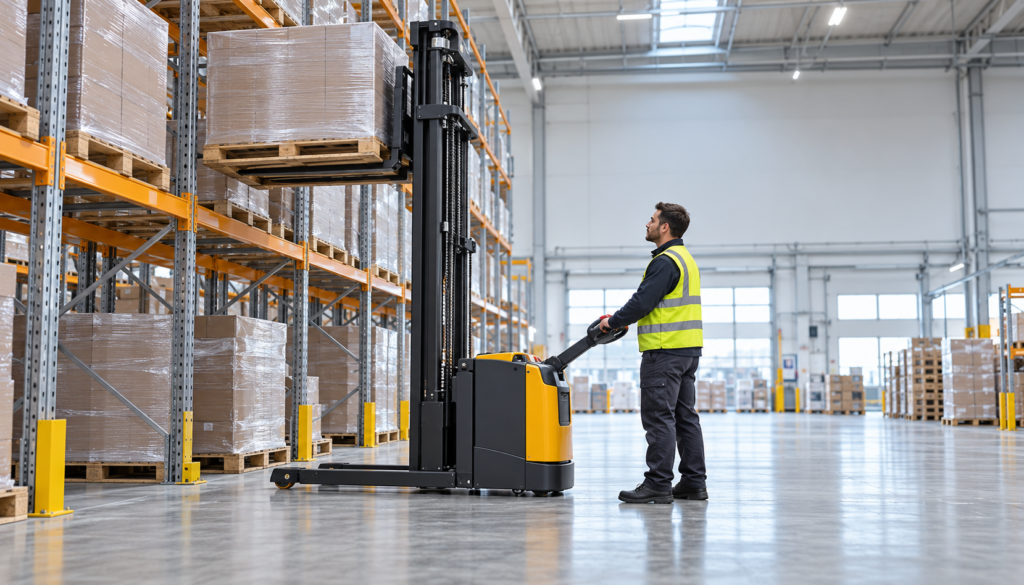
Why Lift Height Matters
The maximum lift height and the maximum usable load are related, but they are not interchangeable specifications.
As the load is raised, mast configuration and truck stability become increasingly important. Depending on the design, the stacker’s residual capacity at an upper rack level may be lower than its nominal capacity at a lower height.
Manufacturers therefore use residual-capacity information to show what a specific truck can handle at defined lift heights and load centers. Product development announcements from Jungheinrich, for example, discuss residual capacity as a distinct performance characteristic rather than treating nominal capacity as the only figure. jungheinrich.com
When requesting a quotation, provide both:
- The height of the rack beam or placement surface.
- The maximum height to which the forks must rise.
Also allow for pallet entry, beam clearance and safe positioning. Do not select a truck whose maximum lift height only just matches the nominal rack height.
Mast, Fork and Attachment Effects
Two stackers with the same nominal capacity may perform differently when equipped with different masts or attachments.
Relevant variables include:
- Simplex, duplex or triplex mast
- Full free-lift requirement
- Extended fork length
- Adjustable-width forks
- Fork extensions
- Load platform or special carriage
- Drum, roll or clamp attachment
An attachment adds weight and may move the load farther away from the mast. OSHA notes that attachments can increase the load center, and that the capacity of the truck-and-attachment combination must not be exceeded. Occupational Safety and Health Administration
Modifications affecting capacity or safe operation should not be improvised. In the United States, OSHA requires prior written manufacturer approval for relevant modifications and additions. Occupational Safety and Health Administration Other markets may have different requirements, so buyers should also check applicable local regulations.
A Practical Selection Example
Assume a warehouse handles a maximum pallet weight of 1,500 kg.
It may appear logical to order a stacker advertised as having a 1,500 kg capacity. However, the pallets are 1,200 mm deep, the highest placement level requires substantial mast extension, and some products are heavier at the front of the pallet.
A 1,500 kg rating at a 500 mm load center does not prove that the machine can lift this pallet at an approximately 600 mm load center to the required height.
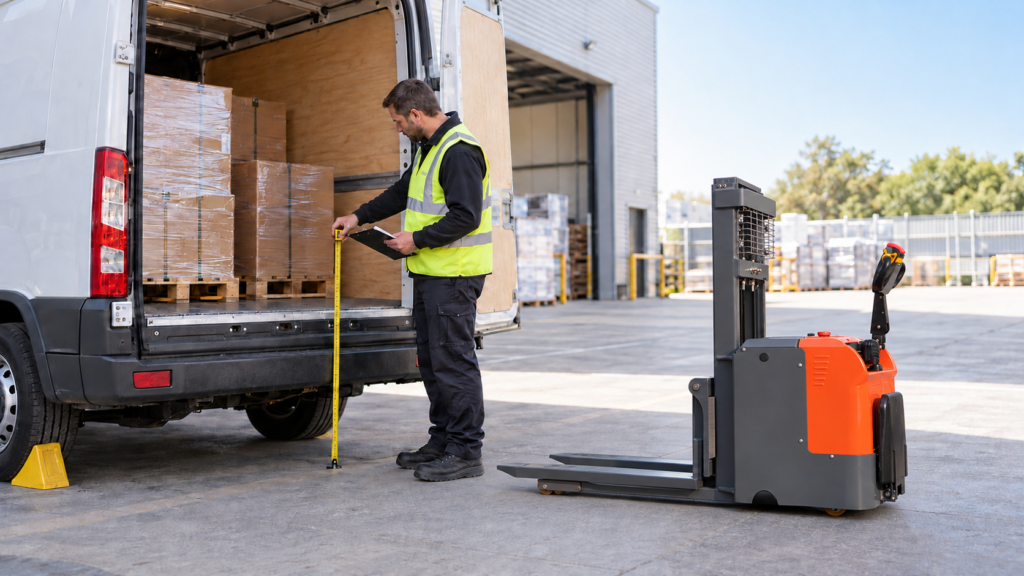
The buyer should provide the supplier with:
- Maximum confirmed pallet weight
- Pallet dimensions and fork-entry direction
- Estimated or known center of gravity
- Required fork height
- Mast lowered-height restriction
- Rack and aisle dimensions
- Any required attachments
The supplier can then recommend an appropriate configuration and confirm its residual capacity.
Electric Stacker Selection Checklist
Before ordering, record the following operating information:
Load
- Maximum load weight—not the average
- Pallet length, width and height
- Load distribution and center of gravity
- Unstable, liquid or irregular-load conditions
Racking and Workplace
- Highest required fork position
- Beam and pallet clearance
- Aisle width and turning space
- Floor condition, slopes and thresholds
- Doorway and ceiling restrictions
- Indoor, outdoor, cold-room or corrosive environment
Equipment
- Pedestrian, platform or ride-on operation
- Required mast type and free lift
- Fork length and outside width
- Battery type, runtime and charging arrangement
- Expected daily operating hours
- Approved attachments or customization
Battery voltage, charger compatibility, inspection intervals and operating procedures must always be checked against the manual and identification data for the actual equipment supplied.
Practical Takeaway
Rated capacity is not a standalone purchasing specification. A suitable electric stacker must match the real load center, required lift height, pallet geometry, mast configuration and workplace.
For every application, confirm the capacity shown on the actual truck’s data plate. If the plate is missing, damaged or inconsistent with the installed attachment, remove the equipment from service until the correct information has been verified.
FAQ
Can a 1.5-ton electric stacker lift 1.5 tons to maximum height?
Not necessarily. The answer depends on its specified load center, mast, lift height and installed configuration. Check the capacity plate and residual-capacity chart.
What happens when the load center increases?
The load creates a greater forward moment. The truck’s permitted capacity may decrease, so manufacturer-approved data is required.
Can longer forks change capacity?
They can affect load positioning and may increase the effective load center. Confirm the complete fork and load arrangement with the supplier.
What information should I send when requesting a quotation?
Provide maximum weight, pallet dimensions, load distribution, required fork height, aisle width, floor conditions, operating hours and any attachment requirements.
Find the Right Stacker for Your Application
PALLETSLIFT can help evaluate pallet size, load center, lift height, mast restrictions and special handling requirements before equipment selection.
Contact PALLETSLIFT to discuss a standard or customized electric stacker for your warehouse.
Need Help Choosing The Right Equipment?
Tell us your load capacity, working environment, fork size, lifting height and operating requirements. Our team can recommend a suitable pallet truck, forklift or stacker for your application.