Electric Pallet Truck Pulling to One Side A Practical Wheel and Steering Troubleshooting Guide
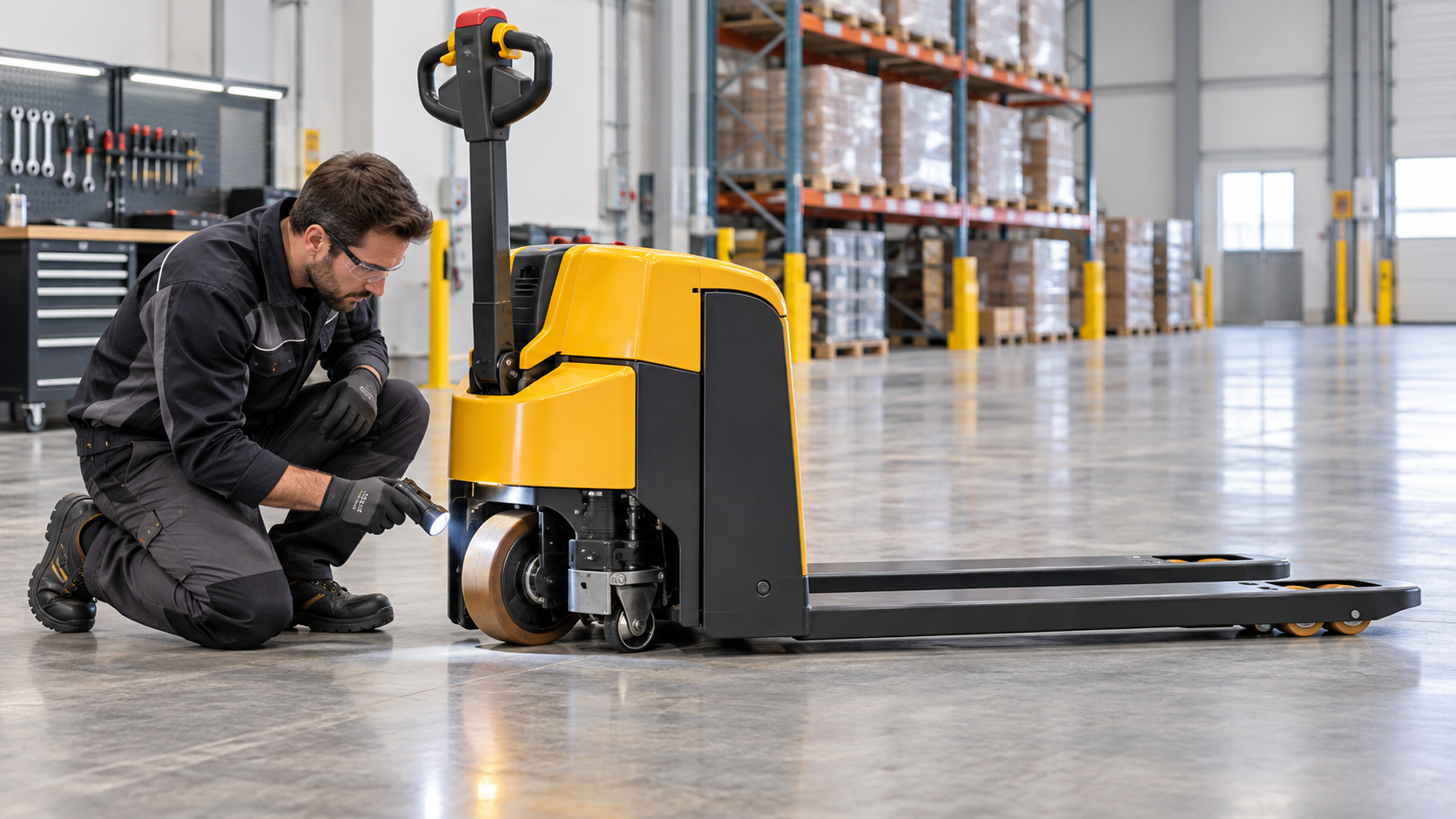
Electric Pallet Truck Pulling to One Side? A Practical Wheel and Steering Troubleshooting Guide
An electric pallet truck should travel and steer predictably. When it starts pulling to one side, vibrating or resisting a turn, operators may first blame the drive motor. The cause could also be a damaged load wheel, debris around a wheel, an uneven floor, a shifted pallet or a brake that is not releasing correctly.
These symptoms deserve prompt attention. A truck that is difficult to control should be parked and reported, then assessed under the procedure for that specific model. For U.S. workplaces covered by OSHA’s powered industrial truck rule, a truck found defective or unsafe must be removed from service until restored to safe operating condition; repairs must be made by authorized personnel. Requirements elsewhere may differ. Occupational Safety and Health Administration
The following sequence helps a maintenance team collect useful evidence without guessing at a replacement part.
First, describe exactly when the problem occurs
A clear symptom report can shorten diagnosis. Record whether the truck:
- Drifts consistently left or right
- Vibrates at a particular travel speed
- Shakes only while carrying a pallet
- Becomes hard to steer in one direction
- Makes a scraping, clicking or grinding noise
- Feels as though a wheel catches once per revolution
- Brakes unevenly or takes longer to stop
- Displays a controller fault
Note the location, floor surface, load weight and direction of travel. If the problem began after crossing a dock plate, striking an obstruction or changing a wheel, include that history.
OSHA’s pre-operation guidance says unusual noises or vibrations should be reported immediately and includes brakes and steering in operational checks. Occupational Safety and Health Administration If steering or braking feels unreliable, do not continue moving pallets to “see whether it improves.”
Check the route and floor condition
A truck may appear to pull to one side because its wheels repeatedly encounter a floor joint, slope, damaged dock plate or scattered debris.
From a safe, stationary position, inspect the area where the symptom was noticed:
- Is there stretch wrap, strapping, wood or metal debris?
- Is the concrete broken or uneven?
- Does the truck cross an expansion joint at an angle?
- Is a dock plate secure and suitable for the equipment?
- Is the floor wet, oily or unusually dusty?
Toyota identifies debris and poor floor conditions, along with heat, as common causes of drive and load wheel wear on warehouse equipment, including pallet jacks. Toyota Forklifts Blog
Correcting the route hazard may prevent repeated wheel damage. It does not replace inspection of a truck that has already developed abnormal steering or vibration.
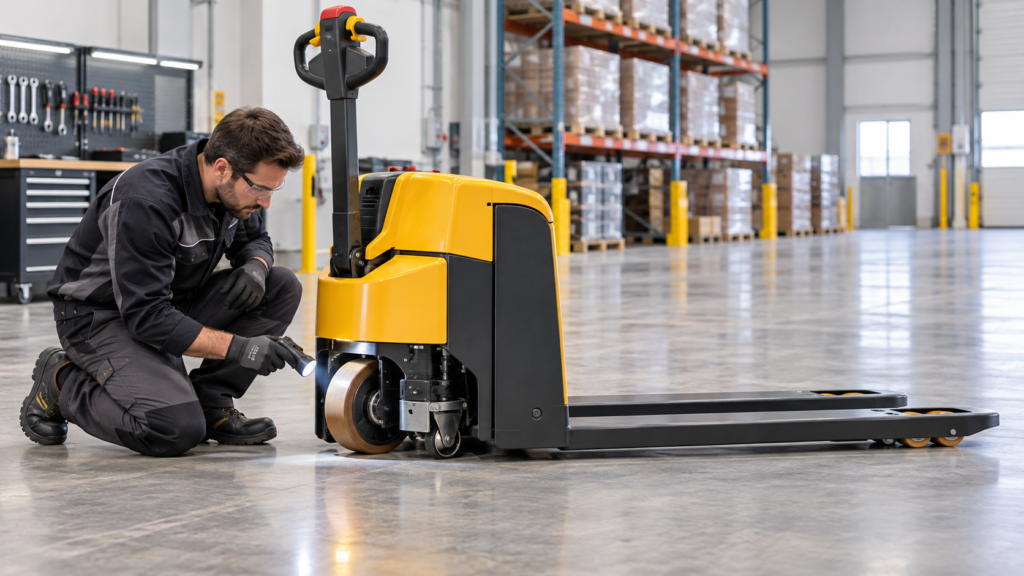
Inspect the visible wheel surfaces
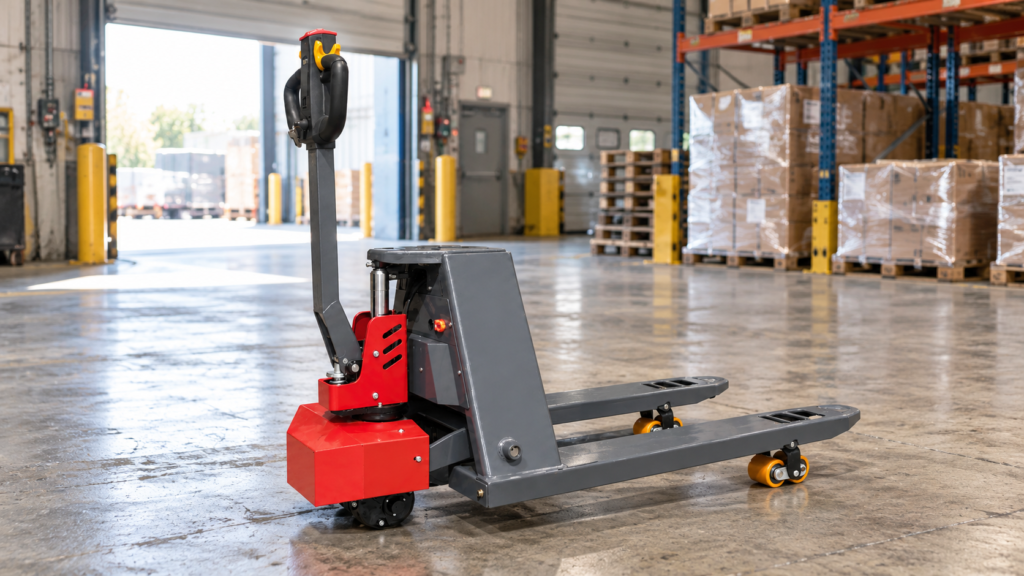
A pedestrian electric pallet truck typically has a powered drive wheel near the power unit and load wheels near the fork tips. Some configurations also have stabilizing or caster wheels. The exact arrangement varies by model.
With the truck parked, forks lowered and power isolated as required by its manual, visually check accessible areas for:
- Polyurethane separating from the wheel core
- Flat spots, deep cuts or missing material
- Embedded metal, stones or pallet fragments
- Stretch wrap or strapping wound around an axle
- Uneven wear between paired load wheels
- Loose or visibly damaged wheel hardware
- Signs that a wheel has been rubbing against its bracket
A repeating bump may suggest a flat spot or damaged wheel surface. Scraping may point toward debris, rubbing or a bearing problem. These are diagnostic clues, not proof of a particular fault.
Do not reach beneath the forks or power unit, remove guards or raise an unsupported truck for an operator-level check. A qualified technician should follow the model’s approved lifting and support procedure before inspecting concealed wheel and axle components.
Consider the pallet and load
The load can change how a truck feels. A damaged pallet may drag against the floor. A pallet that is not fully supported, or a load concentrated on one side, may place different demands on the left and right load wheels.
Record:
- Whether the symptom appears empty, loaded or both
- The approximate load weight
- Whether the pallet is intact and centered on both forks
- Whether the forks enter fully
- Whether the load shifts during travel
If the truck runs normally without a load but becomes difficult to steer with a particular pallet, inspect the pallet and load arrangement. Do not infer that the truck is sound from an empty run alone.
Keep within the actual truck’s rated capacity and follow its manual for pallet entry, load positioning and travel.
Have a technician examine brakes and steering
Wheel damage is only one possible cause. A brake that drags, a steering joint that binds, a damaged tiller assembly or a problem in an equipped electronic steering system may create similar symptoms.
An authorized technician can investigate, using the service manual:
- Brake release and stopping behavior
- Steering linkage, pivot and bearings
- Drive unit mounting and wheel alignment
- Load wheel axles and bearings
- Stabilizer-wheel adjustment, where fitted
- Relevant controller fault records
- Wiring and sensors associated with steering or travel
The checks must match the truck’s design. A basic walkie pallet truck and a larger rider model may use different steering and braking systems.
For covered U.S. workplaces, OSHA requires battery disconnection before repairs to an industrial truck’s electrical system and replacement parts equivalent in safety to the original design. Occupational Safety and Health Administration Technicians should follow the actual manufacturer’s isolation, testing and reassembly instructions.
Replace parts as a matched specification
When a wheel needs replacement, “the same approximate size” is insufficient. Confirm the approved:
- Wheel diameter and width
- Bore, bearing and axle arrangement
- Material and hardness
- Load rating
- Hub design
- Required paired-wheel replacement practice
- Fasteners and tightening procedure
A different diameter or material can alter ground clearance, load sharing, traction and handling. Record the truck model and serial number when ordering parts, and verify compatibility with the equipment supplier.
After repair, an authorized person should complete the specified checks before release to service. These may include inspecting wheel clearance, steering movement, brake operation and controlled travel in an uncongested area. The test procedure and acceptance limits must come from the actual equipment documentation.
A useful maintenance report
A short report should give the next technician enough information to reproduce and investigate the fault:
| Record | Example of useful detail |
|---|---|
| Symptom | Pulls left while carrying a pallet |
| Conditions | Smooth concrete; occurs after several minutes |
| Load | Approximate weight and pallet dimensions |
| Location | Near dock plate or a specific floor joint |
| Evidence | Photo of wheel wear or debris |
| Fault indication | Displayed code and time it appeared |
| Action | Truck parked and tagged for inspection |
This record is more useful than “steering broken.” It also helps a fleet manager identify repeated damage associated with a route or floor condition.
Practical takeaway
Start with the circumstances, floor and visible wheels, then have a qualified technician assess the braking and steering system. Keep a truck with uncertain steering or braking out of service until the defect is corrected and operation is verified.
Inspection, lifting, battery isolation, wheel replacement and return-to-service procedures must follow the manuals for the actual truck, battery and installed components.
FAQ
Can a worn load wheel make an electric pallet truck pull to one side?
It may contribute, especially if wear or debris differs between sides. Steering, brakes, floor condition and load placement should also be checked.
Why does the truck vibrate only when loaded?
The added load may reveal a damaged load wheel, bearing, pallet or floor interaction. Stop using the truck if control is affected and have the cause assessed.
Should both load wheels be replaced together?
Follow the manufacturer’s parts and service instructions. Paired wheels may need matched dimensions and condition, but the requirement depends on the model.
Can an operator remove wrap tangled around a wheel?
Only within the operator procedures for that truck, after parking and isolating it as instructed. Debris requiring guard removal, lifting or access beneath the truck belongs with authorized maintenance personnel.
Discuss Your Pallet Truck Application
Recurring wheel damage can indicate that the truck’s wheel configuration and operating route need to be reviewed together. Send PALLETSLIFT your pallet dimensions, maximum load, floor conditions, travel route and photos of the affected wheels.
Contact PALLETSLIFT to discuss an electric pallet truck suited to your application.
Need Help Choosing The Right Equipment?
Tell us your load capacity, working environment, fork size, lifting height and operating requirements. Our team can recommend a suitable pallet truck, forklift or stacker for your application.