Electric Pallet Truck Drives but Won’t Lift? A Safe Troubleshooting Guide
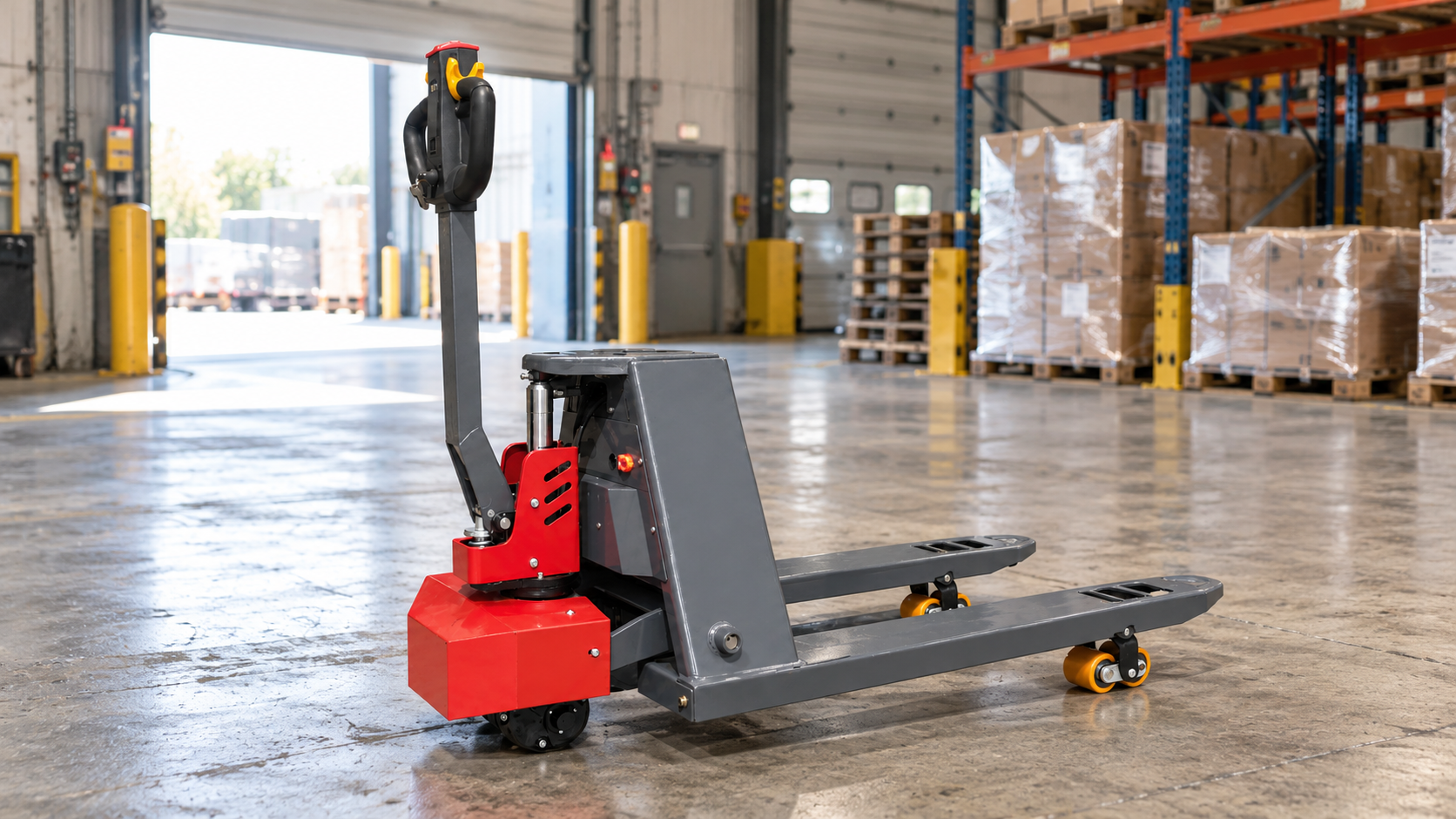
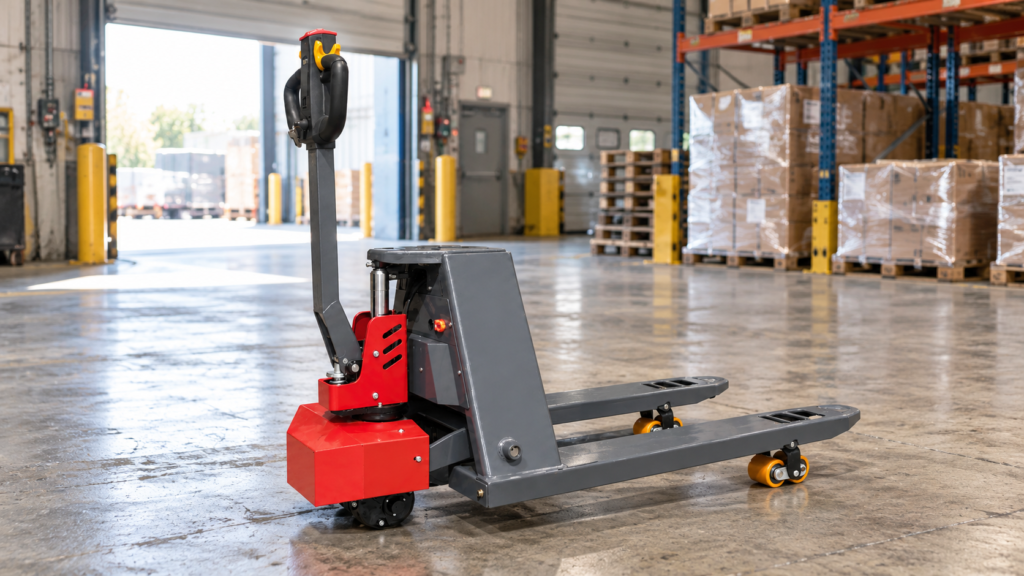
A fully electric pallet truck may still travel even when its forks will not rise. That symptom narrows the investigation, but it does not identify one faulty part. Depending on the truck, the cause could involve a lift command, battery or controller condition, pump circuit, hydraulic system, or the load itself.
First confirm that the vehicle has powered lifting. Some semi-electric pallet trucks have powered travel but manual hydraulic lifting; their operating controls and fault path are different. For any truck, use the manual for its actual model, battery and charger—not a procedure written for another vehicle.
Stop work and describe the symptom
Park in a suitable area, lower the forks if possible, remove the load and keep people clear of the fork area. If the truck has a visible leak, damaged wiring, abnormal noise or another condition that could make operation unsafe, take it out of service and report it.
For covered workplaces in the United States, OSHA requires powered industrial trucks needing repair or found unsafe to be removed from service; repairs must be made by authorized personnel. Apply the rules and procedures relevant to your location and equipment. Occupational Safety and Health Administration
Before anyone investigates further, write down what actually happened:
- Does lifting fail every time or only intermittently?
- Will the forks rise without a load?
- Do they begin to rise and then stop?
- Is there a warning light or fault code?
- Did the problem appear after charging, an impact or a change of load?
These observations are more useful to a technician than “the hydraulics are broken.”
Check the load and the operator-facing indicators
If the failure occurred while handling a pallet, compare its weight with the capacity plate on the actual truck. Also check whether the pallet is caught on a rack, floor obstruction or another object. Do not keep pressing the lift control to force a stuck or overloaded load upward.
Next, look at the battery indicator and any displayed fault message. A truck that can still move does not necessarily have the battery condition required for lifting. Some electric trucks use a low-battery lift-interrupt function, but its presence and setting are model-specific; Toyota describes such a function on applicable equipment. Toyota Forklifts Blog
Follow the truck and battery manuals if charging is indicated. Do not bypass a warning, substitute a charger or assume that travel capability proves the lift circuit has adequate power.
Check controls without opening the truck
With the forks unloaded and the area clear, confirm that the truck is in the operating state required by its manual. Note whether the lift button feels damaged or fails to return normally. Record any error code exactly as shown; avoid clearing it repeatedly before maintenance staff have seen it.
Observe what happens when lift is requested:
- No response or pump sound: a command, interlock, fuse, wiring, controller or lift-motor issue may need investigation.
- Pump sound but no fork movement: hydraulic supply, valve, pump or mechanical resistance may be involved.
- Forks rise empty but not with a permitted load: the technician needs to assess the load, battery condition and hydraulic performance.
- Forks rise and then drift down: stop using the truck and report possible hydraulic leakage or valve/cylinder trouble.
These are diagnostic clues, not confirmed diagnoses. Do not remove covers or touch electrical connections to test them as an operator.
Look for visible hydraulic and mechanical clues
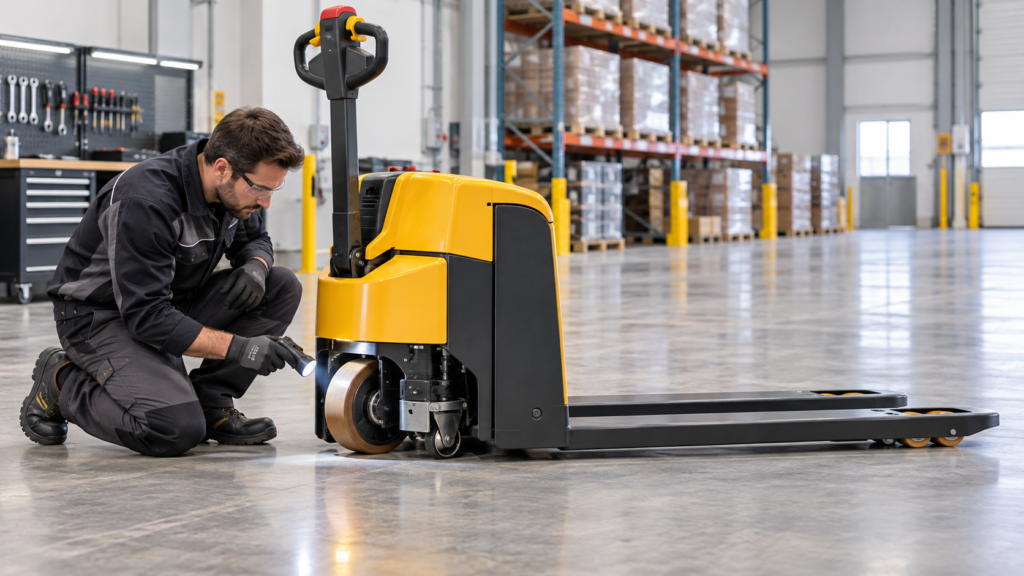
From outside the truck, check the floor and accessible parts for fresh oil, damaged hoses, bent components or an obstruction in the lifting linkage. Do not put a hand or foot beneath the forks. Photograph a leak or damaged area from a safe position so the service team can locate it.
A Global Industrial electric pallet jack manual lists several possible reasons its forks may fail to rise, including insufficient or contaminated hydraulic oil and a damaged hydraulic power unit. Those are examples for that manual’s equipment, not a universal diagnosis or oil specification for PALLETSLIFT trucks. static.globalindustrial.com
Do not add oil, change a fuse or adjust a pressure valve based on a generic online guide. Fluid type, level-check position, components and service access must come from the actual equipment manual. Hydraulic pressure and unsupported raised parts can create hazards during repair.
Give the technician a clear handover
An authorized technician can use the model-specific service information to separate an electrical command problem from a hydraulic or mechanical one. The service review may include the lift switch signal, controller fault history, battery behavior during a lift request, lift circuit, pump operation, hydraulic fluid condition and visible leakage.
Provide the truck model and serial number, battery type, exact symptoms, fault codes, load details and photographs. Mention whether travel and lowering still work. The technician should follow the equipment’s isolation and support procedures before electrical or hydraulic work; these procedures differ between models.
Once repaired, the truck should be checked according to its manual before returning to work. An unloaded lift alone does not establish that it performs correctly with a permitted working load.
Practical takeaway
A traveling pallet truck with no lift is not automatically a failed pump. Begin with safe, external checks and a precise symptom record. Leave internal electrical tests, hydraulic adjustments and repairs to authorized service personnel.
FAQ
If the truck still drives, can the battery be ruled out?
No. Check the indicator and fault messages. Some equipment can restrict lifting at a battery threshold, but the behavior must be confirmed for the specific truck.
Should an operator top up hydraulic oil when the forks will not lift?
Not from this symptom alone. A qualified person should check for leaks and follow the actual manual’s fluid type and level procedure.
Can the truck keep moving pallets if lifting has stopped?
Do not use a defective or potentially unsafe truck as a workaround. Remove it from service and follow your site’s reporting procedure.
Need help specifying or supporting an electric pallet truck? Share the application, load, truck configuration and service requirements with PALLETSLIFT.
Need Help Choosing The Right Equipment?
Tell us your load capacity, working environment, fork size, lifting height and operating requirements. Our team can recommend a suitable pallet truck, forklift or stacker for your application.