Electric Pallet Truck Charging for Multiple Shifts: Lead-Acid or Lithium?
Can One Electric Pallet Truck Battery Cover Multiple Shifts?
An electric pallet truck may handle the first shift comfortably but need charging before the second shift ends. Buying a larger battery seems like an obvious answer, yet available charging time, workload and charger compatibility may matter just as much as battery capacity.
For a multi-shift warehouse, the useful question is: Can the complete truck, battery and charger system support the work schedule? Answer it with a short operating study before selecting lead-acid or lithium.
Map the Work Before Comparing Batteries
Record the start and end of each shift, the busiest handling periods and the breaks when a truck can genuinely be parked for charging. Track each truck separately if some handle heavier loads or travel longer routes.
For several representative days, note operating hours, loads moved, travel distance if available, displayed battery level at the start and end of work, charging sessions and unexpected downtime. Include the heaviest normal day. A quiet day can make an undersized energy plan appear adequate.
Battery indicators and catalogue runtime claims are useful starting points, but they do not replace measurements under the intended load and route. Temperature, stop-start frequency, floor conditions and battery age can change the result. Ask the supplier which assumptions support any runtime estimate.
Understand the Lead-Acid Option
Lead-acid is not one uniform battery type. Flooded and sealed designs can have different maintenance and charging instructions. A warehouse with one shift and a long, predictable charging window may find a manufacturer-approved conventional charging plan practical.
Multiple shifts may call for another approved charging method, a spare battery or an additional truck. Lead-acid batteries can be used with some opportunity-charging arrangements, but the battery and charger must be specified for that duty. Do not assume that repeatedly plugging a conventional pack in during short breaks is harmless.
Toyota Material Handling’s charging-method guide, published July 20, 2026, discusses conventional, fast and opportunity charging. It notes that charging method, battery wear, cooling and maintenance must be considered together. That guidance concerns Toyota forklift operations; applying the planning principle to a PALLETSLIFT pallet truck still requires confirmation for the actual components. Toyota Forklifts Blog
Understand the Lithium Option
An approved lithium system may suit a schedule with regular breaks for charging, especially when removing a battery between shifts would interrupt work. Its operating plan still depends on the pack, battery management system, truck controller and matching charger.
“Lithium” alone does not specify charging speed, permitted temperature range or the amount of energy that can be added during a break. Request the actual battery and charger documentation. Confirm whether the proposed configuration allows the intended frequency and length of charging sessions.
A short break is useful only if the charger is available, the truck can reach it and the approved charging procedure fits the site’s workflow. If every truck arrives at the same charger at the same time, the fleet may still lose productive hours.
Check the Complete Battery and Charger System
Before choosing a battery option, confirm these items for the specific truck configuration:
- Battery chemistry, nominal voltage and full operating voltage range
- Usable capacity under the supplier’s stated conditions
- Approved charger model, charge profile and input power requirements
- Connector type, polarity and cable arrangement
- Battery management and truck-controller compatibility, where applicable
- Physical fit, mounting and any battery weight requirements
- Charging temperature limits and fault indications
Do not connect a charger simply because its plug fits, or retrofit a different battery chemistry without manufacturer approval. Changes in voltage behavior, controls, physical fit or battery mass may affect the truck.
Ask for a written explanation of how the recommended package covers the measured duty cycle. For a demanding schedule, evaluate the cost and uptime of more than one option: a larger approved pack, scheduled charging, a spare approved battery or another truck.
Plan the Charging Location
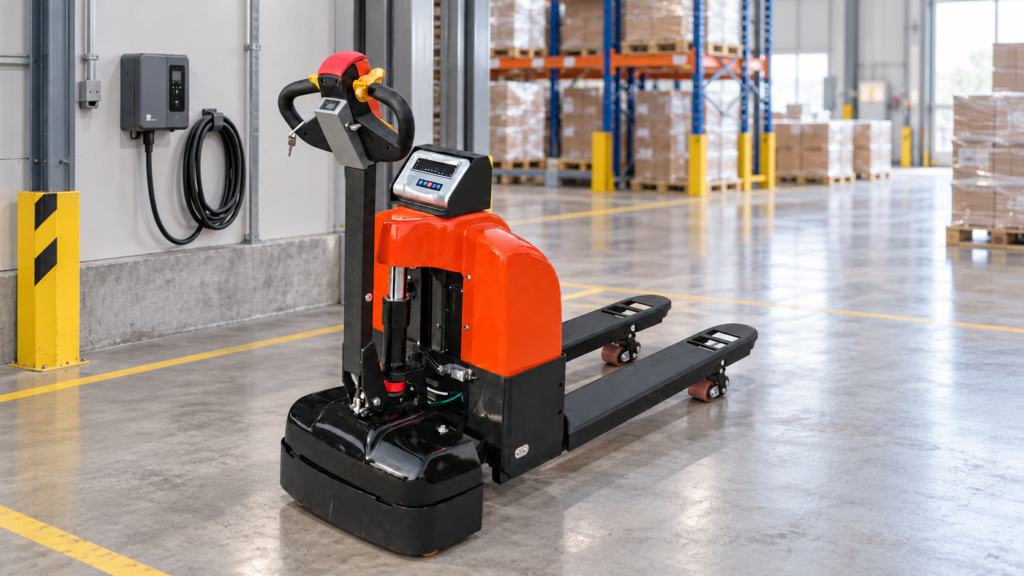
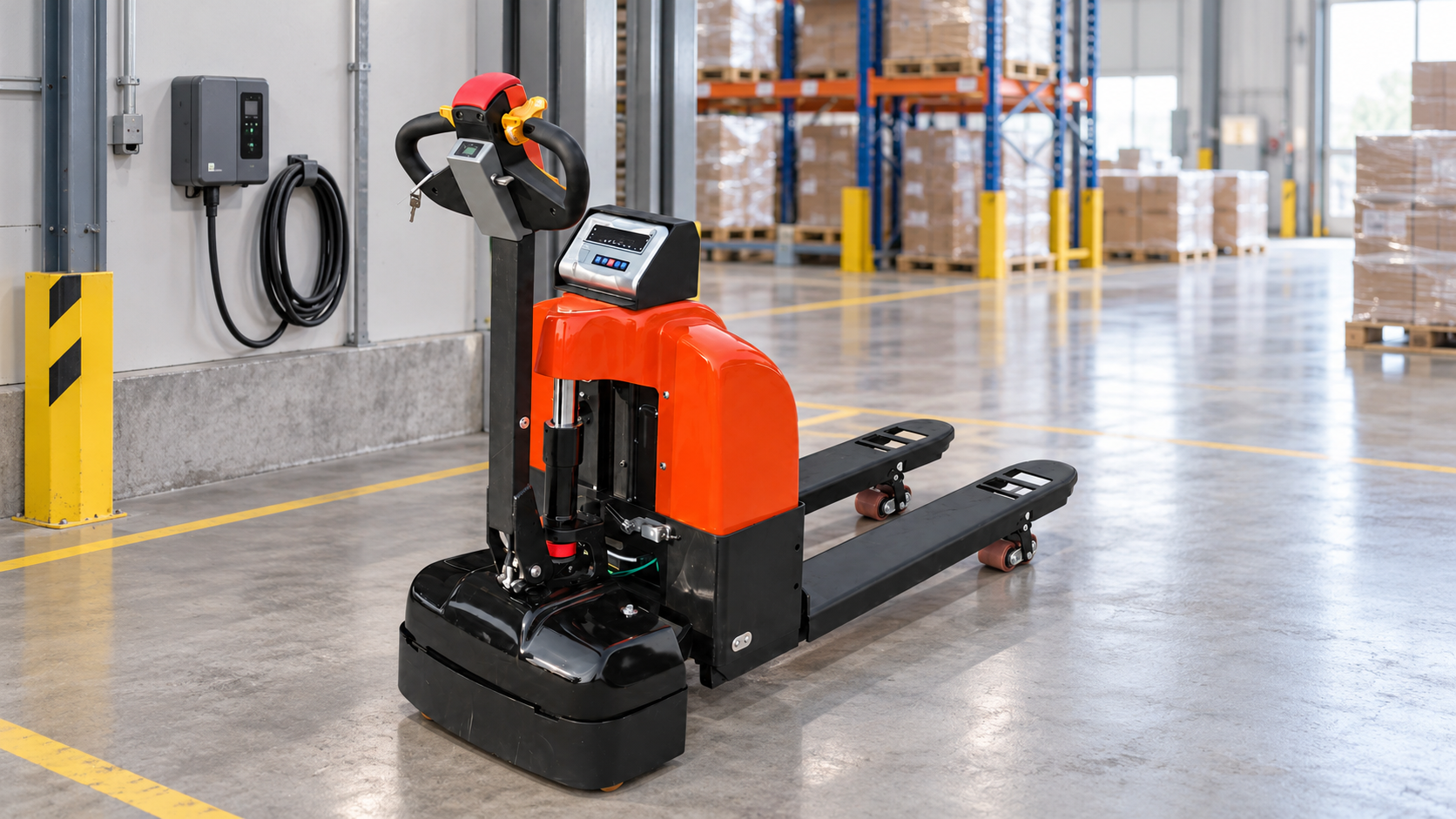
Place chargers where parked trucks will not obstruct normal traffic. Protect charging equipment from vehicle contact and keep cables managed. Train operators on the charging procedure for the battery actually installed.
For U.S. workplaces covered by OSHA’s powered industrial truck rule, 29 CFR 1910.178(g) addresses designated charging areas, positioning and braking trucks before charging, and precautions against sparks and flames. Requirements elsewhere differ; site rules and the applicable battery and charger manuals govern the installation. Ventilation and electrolyte-handling needs also depend on the activity and battery type. Occupational Safety and Health Administration
Make the Decision with a Trial
Ask the supplier to review your busiest shift pattern and available charging windows. Then test the proposed truck and approved charger in the real operation. Record whether the truck completes its assigned work, how long it occupies a charger and whether another truck must wait.
Practical takeaway: Choose the battery strategy from measured work, permitted charging time and confirmed component compatibility. Do not promise two-shift runtime from an amp-hour figure alone.
All charging, inspection, maintenance and battery procedures must be checked against the manual for the actual equipment supplied.
FAQ
Can I opportunity-charge any lithium pallet truck?
No. Confirm that the installed battery, battery management system, charger and truck are approved for the proposed charging pattern.
Can one charger serve both lead-acid and lithium batteries?
Only if the charger manufacturer and equipment supplier explicitly approve and configure it for each battery. A matching connector is insufficient.
How many amp-hours do I need for two shifts?
There is no reliable universal number. Load, route, operating time, usable battery capacity and approved charging windows must be assessed together.
Is a spare battery always better than a second truck?
That depends on approved battery-changing arrangements, space, staffing, cost and the downtime your operation can tolerate.
Inquiry CTA: Send PALLETSLIFT your truck application, number of shifts, busiest-day workload, available charging breaks and site power details. Contact PALLETSLIFT to discuss a suitable truck, battery and charging configuration.
Need Help Choosing The Right Equipment?
Tell us your load capacity, working environment, fork size, lifting height and operating requirements. Our team can recommend a suitable pallet truck, forklift or stacker for your application.